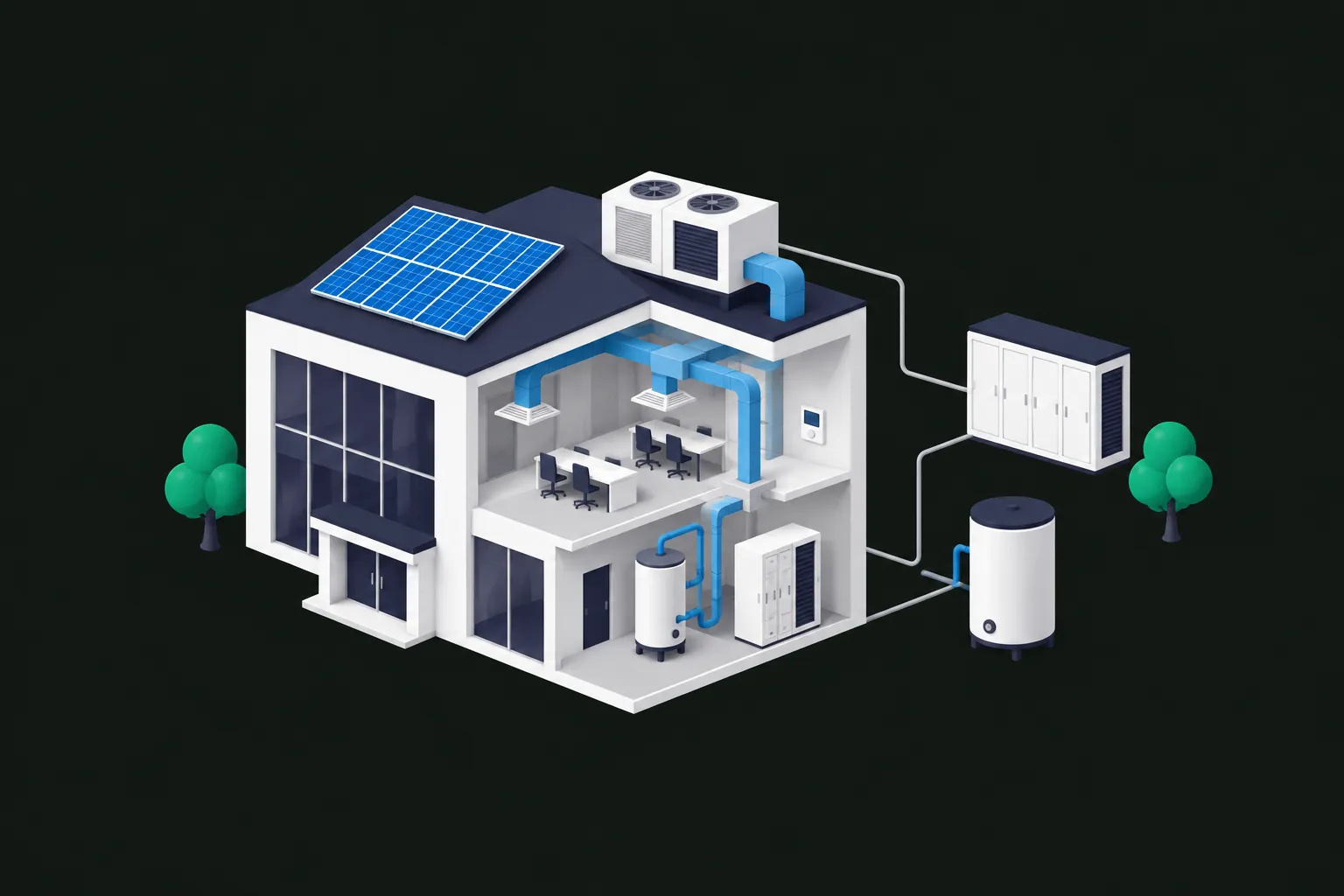

A building management system, or BMS, connects information and controls used to operate a facility. Depending on the installation, that can include HVAC schedules, zone temperatures, equipment status and alarms. Its value comes from helping the facility team make and verify operating decisions.
If your building has separate thermostats, inconsistent schedules or several vendor dashboards, start by mapping how equipment is operated today. A successful improvement does not always begin with replacing every device.
What does a BMS do?
Building controls coordinate equipment and the conditions it serves. The U.S. Department of Energy describes controls as an integrating layer for building systems, while identifying interoperability and commissioning as important challenges.
For a facility team, useful questions are concrete: Is equipment running during the intended hours? Which zone needs attention? Has an override been left active? Can the operator see whether a change worked?
BMS and building automation system (BAS) are often used for overlapping functions. Look past the label and ask which equipment, measurements and actions a proposed system actually supports.
Monitoring and control are different capabilities
A sensor can reveal a condition without being able to change it. Similarly, remote access to a thermostat does not automatically provide control over every part of an HVAC system.
For each integration, list the information you can read and the settings you can write. Identify where the final operating sequence runs and who is responsible for maintaining it. This prevents an attractive dashboard from becoming a substitute for a complete operating design.
Start with schedules and overrides
Review normal opening hours, weekend operation, cleaning periods and holiday exceptions. Compare those intentions with actual equipment runtime. Ask the team to identify zones that routinely need manual adjustment.
An illustrative example: a tenant changes its working hours, but the HVAC schedule stays unchanged. The first task is to establish the correct schedule and verify the resulting conditions. Buying additional sensors before checking that schedule may add data without resolving the underlying problem.
When changing operation, retain the building’s required safety limits and occupancy requirements. Record who approved the change, what was adjusted and how the result will be reviewed.
Bring indoor conditions into the same conversation
Temperature is only part of the operating picture. Where suitable sensors are installed, humidity and other indoor-air measurements can help the team understand conditions across zones. Readings need location, time and equipment context to be useful.
Serious-IAQ provides local displays and options for remote monitoring through a gateway. Review the selected model’s sensor set and installation requirements. A single reading should prompt investigation in context rather than being treated as a complete assessment of a building.
A practical first-month plan
Week 1: establish the baseline
Inventory the equipment, controls and available meters. Record operating hours, known issues and the people who handle them. Preserve existing settings before making changes.
Week 2: resolve obvious inconsistencies
Check time zones, clock settings, holiday schedules, device names and zone mapping. Review long-running overrides. Prioritize issues that the facility team can verify directly.
Week 3: trial one bounded improvement
Choose a zone or equipment group and define the intended result. For example, test a corrected operating schedule while tracking runtime and occupant feedback. Keep other changes limited so the result remains interpretable.
Week 4: review and document
Compare observations with the baseline. Account for differences in weather, occupancy and operating hours before attributing a change in energy use to the controls. Record what worked, what did not and the next action owner.
This is a suggested project structure, not a guaranteed commissioning timeline. The DOE guide to organizational energy management provides additional context for maintaining an ongoing energy-management process.
What should you ask a BMS provider?
- Can the existing equipment be integrated, and what additional hardware is needed?
- Which points are read-only, and which support control?
- What remains operational during a loss of internet access?
- How are changes, alarms and unresolved issues reviewed?
- Who commissions the installation and trains the operating team?
From building operation to distributed energy
A facility with batteries, solar or flexible loads may also have an energy coordination requirement. Keep local building operation clear before connecting it to a wider program. Our DERMS guide explains that next layer.
Explore BMS & Automation and Building Controls, or talk to Serious Controls about an improvement plan around the equipment you already have.