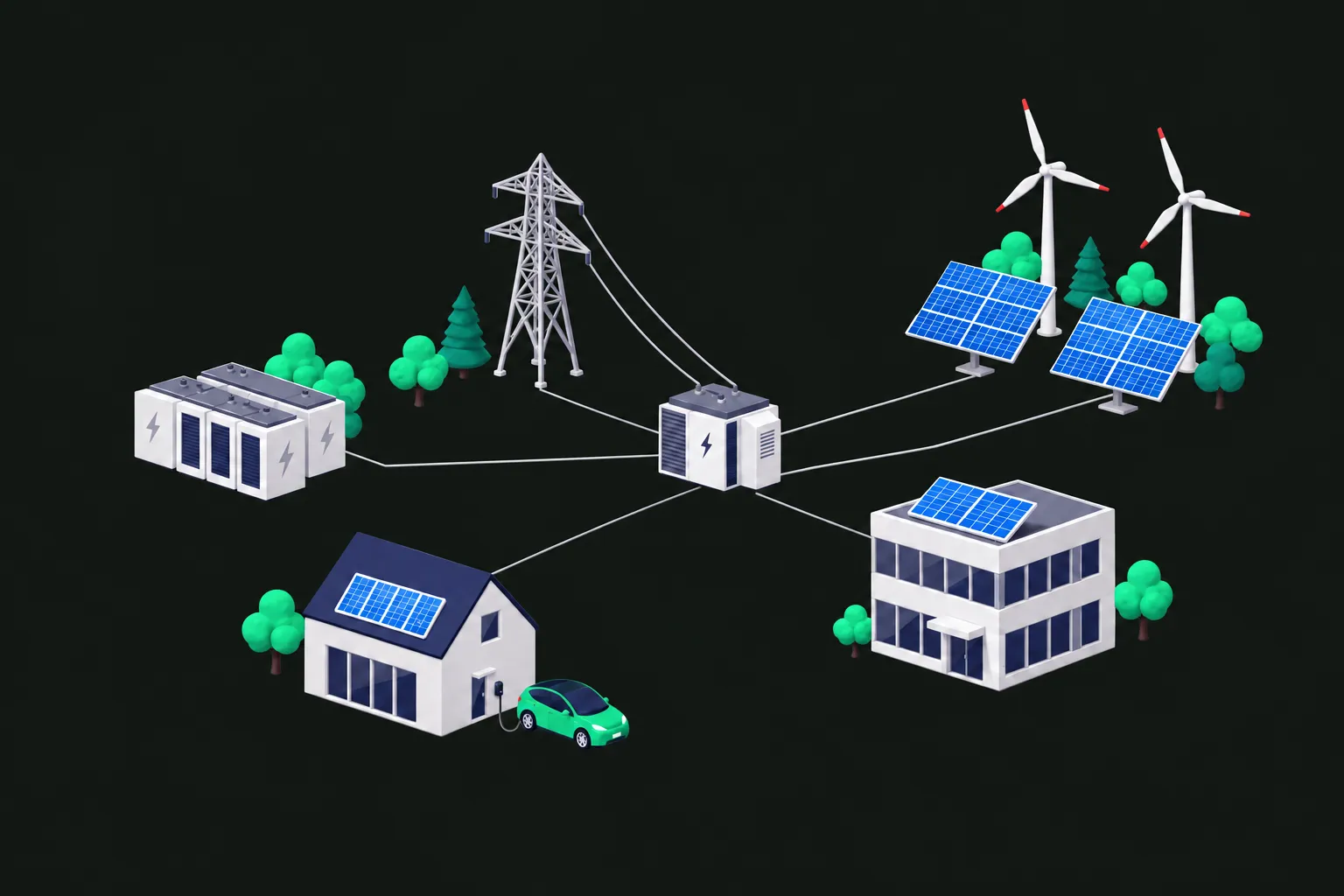
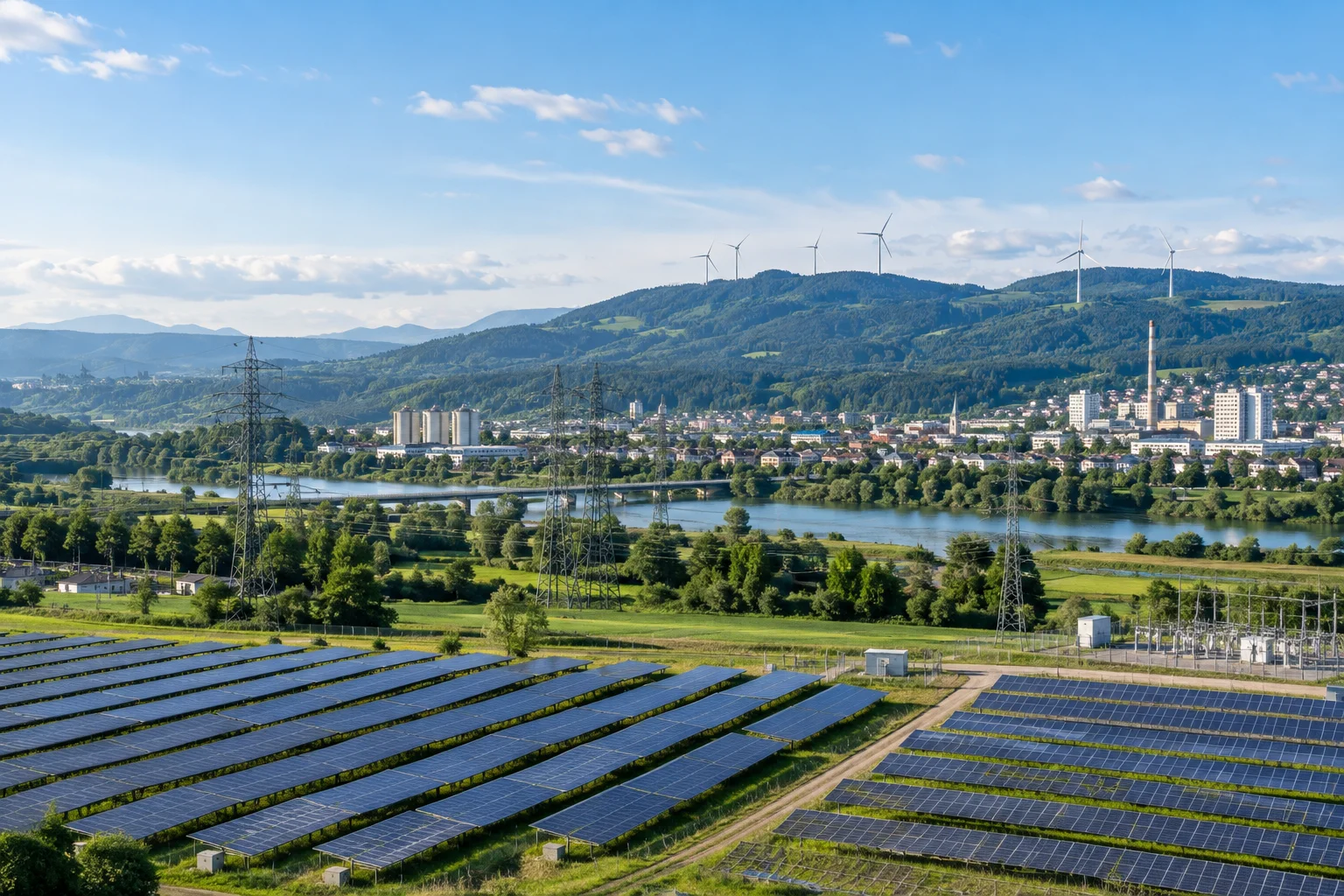
A battery can follow a local schedule. A solar installation can report production. A building can adjust its HVAC settings. The harder question is how these resources should work together across sites, owners and operating constraints. That is the problem a distributed energy resource management system, or DERMS, is designed to address.
This guide explains the difference between a resource, the software coordinating it and the program it participates in. It also gives you a practical starting point for evaluating a project.
What counts as a distributed energy resource?
Distributed energy resources are equipment and flexible demand located across the electricity system, including near the places where energy is used. Solar, batteries, controllable loads and EV charging are common examples. The U.S. Department of Energy’s DER overview provides the broader grid context.
Not every connected device is ready for coordinated control. A meter may only report consumption; a charger may expose status without accepting a charging limit. An integration review needs to distinguish what can be measured from what can actually be changed.
DERMS and a virtual power plant: what is the difference?
A DERMS is a management system. A virtual power plant (VPP) is a coordinated collection of resources. The Department of Energy describes VPPs as connected aggregations of distributed resources. A DERMS can support that coordination, but installing software does not by itself enroll equipment in an energy program. DOE’s VPP overview explains the aggregation concept.
Think of three layers:
- Equipment: the battery, solar inverter, charger or building controller.
- Management: the software and communications used to understand and coordinate equipment.
- Operating program: the objectives, permissions and rules that determine when resources participate.
The practical question is not just “Can I see every asset?” It is “Can I coordinate the available assets while respecting each site’s requirements?”
A practical coordination workflow
Start by mapping each asset to its site, owner and connection. Then establish a reliable operating loop:
- Observe. Read power, availability and relevant equipment states. Check timestamps so old data is not mistaken for the current condition.
- Establish limits. Record constraints such as battery reserve, site export limits and the hours when a load may change.
- Plan. Compare the operating objective with the resources expected to be available.
- Coordinate. Send supported instructions through the agreed control path.
- Verify. Compare the requested action with measured behavior, and review exceptions.
For example, a battery may report that it is connected while its backup reserve prevents discharge. A useful operating view must make that distinction visible. Connectivity alone does not establish usable capacity.
Match the system to the operating responsibility
An enterprise energy team usually starts with its own sites. An aggregator needs to organize resources brought by multiple partners. A distribution operator needs network context. These views are related, but their responsibilities differ.
Serious Controls brings these operating roles together through Federated DERMS, connecting eDERMS, aDERMS and DSO DERMS. DERMS Orchestrator provides an integration layer between DERMS environments. The applicable interfaces and functions are defined around the deployment.
What to prepare before a DERMS project
Bring an asset inventory, sample interval data and a short description of the outcome you want. For each equipment type, record the manufacturer, model, connection method, available measurements and supported controls. Identify who can authorize changes and who will respond if a connection is lost.
A useful first milestone is a small pilot with clear acceptance criteria: reliable data, correct site mapping, verified control behavior and an agreed fallback. Expand after the team can explain what happened at every step.
Common questions
Do I need batteries to use DERMS?
No single equipment type defines the entire project. The resources and control capabilities available at your sites determine the scope. Start with an inventory rather than assuming every site needs the same hardware.
Does DERMS replace a building management system?
A building management system addresses facility operation. DERMS addresses distributed resources and coordination across an energy portfolio or network. They can work together; see our building management guide.
Where should we start?
Choose one operating objective and a representative group of sites. Explore Federated DERMS or discuss your integration requirements with Serious Controls.